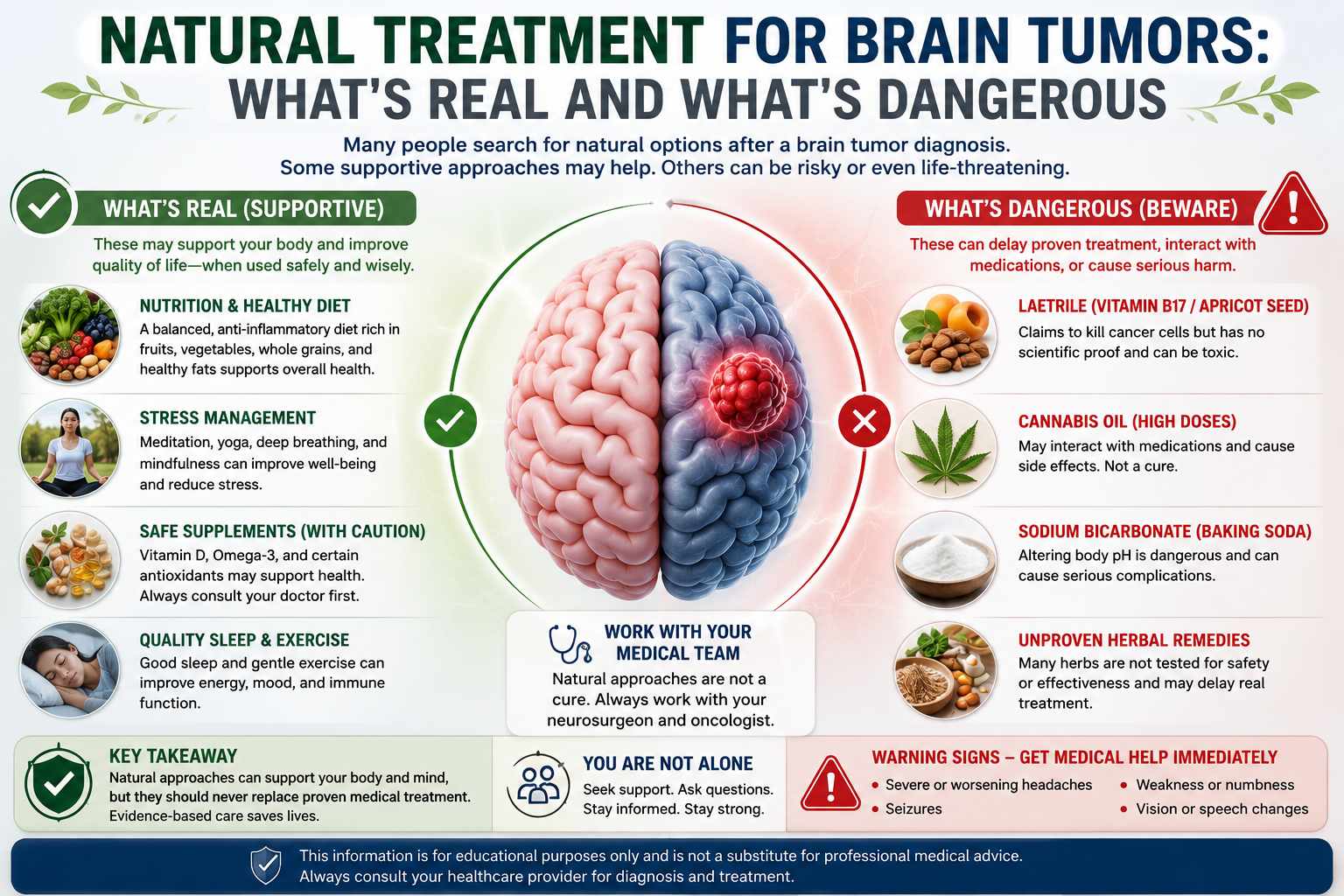
Natural Treatment for Brain Tumors: What’s Real and What’s Dangerous
That conversation changed how she thought about this topic entirely. And it’s the model for this article: honest, specific, and grounded in what evidence actually shows — not what desperate hope or opportunistic wellness marketing claims.
The Important Truth First
No natural remedy, herbal supplement, dietary approach, or alternative therapy has been proven to cure brain tumors or replace conventional treatment. This is not a matter of bias against natural approaches. It’s a matter of evidence — specifically, the absence of clinical trial data showing any natural intervention achieving what surgery, radiation, and chemotherapy achieve.
Brain tumors — particularly aggressive ones like glioblastoma — grow quickly. Delaying or replacing conventional treatment with unproven natural approaches costs time that these tumors use to grow. This is a real danger that kills real people who choose unproven alternatives over evidence-based care.
What does have evidence — and what this article focuses on — is the role of complementary approaches. These are natural and lifestyle-based interventions used alongside conventional treatment, not instead of it. The distinction matters enormously.
What “Complementary” Means vs “Alternative”
Complementary approaches work alongside conventional medical treatment to reduce side effects, improve quality of life, support the body’s resilience, and potentially enhance treatment effectiveness in ways that evidence supports.
Alternative approaches are used instead of conventional treatment. For brain tumors, pursuing alternative approaches instead of medical treatment is medically dangerous and not supported by any credible evidence.
Many patients want natural approaches. That desire is completely understandable. The honest answer is that the best place for those approaches is alongside conventional treatment — not replacing it.
Nutrition and Diet — What Evidence Shows
General Nutritional Principles
Good nutrition supports the body’s ability to tolerate and recover from treatment. Brain tumor patients who maintain adequate caloric and protein intake consistently tolerate chemotherapy and radiation better than those who don’t. Muscle mass preservation during treatment correlates with better treatment outcomes.
A diet emphasizing vegetables, fruits, whole grains, lean proteins, and healthy fats — the broadly Mediterranean-style eating pattern — supports immune function, reduces inflammation, and provides the micronutrients that cellular repair processes need. This isn’t a cure. It’s foundational support that helps the body handle aggressive treatment.
The Ketogenic Diet — What Research Actually Shows
The ketogenic diet — very high fat, very low carbohydrate — has attracted significant interest in brain tumor research. The rationale is metabolic: brain tumor cells rely heavily on glucose for energy. Reducing blood glucose through carbohydrate restriction may theoretically starve tumor cells while normal neurons adapt to using ketone bodies as fuel.
Laboratory studies show that ketogenic conditions affect glioblastoma cells negatively in cell cultures and animal models. Early clinical trials in brain tumor patients show the diet is feasible and safe. However, no large randomized controlled trial has demonstrated that the ketogenic diet extends survival or controls tumor growth in brain tumor patients.
Some patients report feeling better on a ketogenic diet during treatment. Others find the dietary restrictions extremely difficult to maintain alongside treatment-related nausea and appetite changes. The diet requires careful medical supervision — it affects blood sugar management and can interact with certain medications.
If you want to try a ketogenic diet alongside conventional treatment, discuss it with your oncology team first. It should never replace standard treatment.
Intermittent Fasting
Some research suggests that short-term fasting around chemotherapy sessions may reduce chemotherapy side effects and potentially sensitize tumor cells to treatment. The evidence comes primarily from animal studies and small human trials — not large definitive trials.
Short-term fasting is generally safe for well-nourished patients. However, brain tumor patients already facing nutritional challenges from nausea, appetite loss, and high caloric demands of healing should discuss fasting approaches with their care team before attempting them.
Sugar and Cancer
Many patients ask whether eliminating sugar starves brain tumors. All cells — tumor and normal alike — use glucose. Drastically restricting dietary sugar reduces blood glucose somewhat but doesn’t eliminate it, since the body produces glucose through other pathways. The relationship between dietary sugar intake and tumor growth in humans isn’t as direct as simplified explanations suggest.
Reducing excessive added sugar in the diet supports overall health and helps manage the blood sugar elevation caused by corticosteroids. That’s a legitimate reason to reduce sugar intake. But eliminating it entirely won’t starve a brain tumor.
Supplements — Helpful, Neutral, or Harmful?
Supplements That May Help With Side Effects
Vitamin D deficiency is common in brain tumor patients, particularly those spending less time outdoors during treatment. Maintaining adequate vitamin D levels supports immune function and bone health. Testing and supplementing to address deficiency — not megadosing — is appropriate when levels are low.
Omega-3 fatty acids from fish oil show anti-inflammatory properties in research settings. Some oncologists recommend them for patients experiencing significant inflammation-related symptoms. They don’t interact dangerously with most brain tumor treatments.
Melatonin helps regulate sleep in patients whose sleep cycles are disrupted by steroid use, treatment schedules, and anxiety. Sleep quality directly affects treatment tolerance and recovery. Melatonin is generally safe in the doses used for sleep support.
Supplements That May Interfere With Treatment
This category is critically important. Several commonly used supplements can reduce chemotherapy effectiveness or interfere with radiation.
High-dose antioxidants — vitamin C, vitamin E, and others — are a significant concern during radiation therapy. Radiation works partly by generating free radicals that damage tumor cell DNA. High-dose antioxidants may neutralize these free radicals, potentially reducing radiation effectiveness. Most oncologists advise avoiding antioxidant supplements above standard dietary levels during active radiation treatment.
St. John’s Wort strongly activates liver enzymes that break down many drugs — including some chemotherapy agents. It can reduce blood levels of temozolomide and other medications significantly. Brain tumor patients should avoid St. John’s Wort completely during treatment.
Ginkgo biloba, garlic supplements, and fish oil in high doses thin the blood and increase bleeding risk — a serious concern for brain tumor patients who may need surgery or who have tumors at risk of hemorrhage.
Turmeric/curcumin at supplement doses — far beyond what cooking uses — affects drug metabolism in ways that aren’t fully understood and may interfere with certain treatments.
The critical rule: tell your neuro-oncologist about every supplement you take. “Natural” does not mean “safe with chemotherapy.” The interactions are real and can reduce the effectiveness of treatments that matter enormously.
Mind-Body Approaches With Real Evidence
Meditation and Mindfulness
Mindfulness-based stress reduction (MBSR) has the strongest evidence base of any mind-body approach in cancer care. Multiple well-designed clinical trials show that MBSR programs reduce anxiety, depression, and fatigue in cancer patients. They improve sleep quality and quality of life.
Mindfulness doesn’t shrink tumors. But it measurably improves the psychological wellbeing and daily functioning of patients going through treatment — which affects treatment tolerance, decision-making quality, and the experience of a genuinely difficult time.
Numerous apps, online programs, and hospital-based MBSR programs provide accessible entry points. Many cancer centers offer mindfulness programs specifically designed for cancer patients.
Exercise
Exercise during and after brain tumor treatment is one of the most evidence-supported complementary approaches available. Research consistently shows that appropriate exercise during cancer treatment reduces fatigue, improves mood, supports cognitive function, maintains muscle mass, and improves overall quality of life.
The appropriate level depends on where in treatment the patient is and what their current functional capacity allows. Walking is often appropriate even during active chemotherapy. More structured exercise programs — supervised by physiotherapists familiar with oncology — help patients maintain conditioning throughout treatment.
Exercise doesn’t cure brain tumors. But it measurably improves survival-related outcomes and quality of life in ways that matter for real patients.
Acupuncture
Acupuncture has reasonable evidence for managing nausea from chemotherapy, certain types of pain, and some side effects of treatment. Several major cancer centers now offer acupuncture as part of integrative oncology programs.
Acupuncture doesn’t treat brain tumors directly. As a tool for managing specific treatment side effects, it has legitimate supportive value for some patients.
Yoga and Gentle Movement
Adapted yoga programs designed for cancer patients show benefits for fatigue, anxiety, and quality of life in multiple trials. The key is adaptation — programs designed for patients with varying functional capacities and potential neurological deficits, not standard yoga classes.
Approaches That Have No Evidence and Carry Real Risk
Several approaches are promoted heavily online for brain tumors without credible evidence and with real risks.
Cannabis and CBD oil receive enormous interest. Laboratory studies show cannabinoids affect glioblastoma cells in cell cultures. These laboratory results do not translate into proven clinical benefit. No properly conducted clinical trial demonstrates that cannabis or CBD shrinks brain tumors in humans. Both may interact with medications and affect cognitive function — a concern for patients already managing treatment-related cognitive changes. Discuss any cannabis use with your oncology team.
High-dose intravenous vitamin C remains unproven for brain tumors despite widespread promotion. Some interactions with treatment exist. Its use should be discussed with the oncology team rather than pursued independently.
Strict detox diets and cleanses during active treatment can cause dangerous nutritional deficiencies and electrolyte imbalances at a time when nutritional support is critical.
Alkaline diets based on the premise that cancer cannot survive in alkaline environments are based on a misunderstanding of basic physiology. The body tightly regulates blood pH regardless of dietary intake. Dietary changes don’t meaningfully alter internal pH.
How to Talk to Your Doctor About Complementary Approaches
Many patients hesitate to discuss natural approaches with their oncologists — fearing dismissal or judgment. Most neuro-oncologists welcome these conversations. What they don’t support is patients pursuing these approaches secretly while on treatment, because interactions can affect treatment effectiveness without anyone’s knowledge.
Bring a written list of everything you’re considering — supplements, dietary changes, alternative therapies. Ask specifically whether each item might interact with your treatment. Ask what evidence exists for any claimed benefits. Ask which approaches your oncologist actively supports for symptom management.
Many major cancer centers have integrative oncology departments staffed by physicians who specialize in exactly these conversations — combining evidence-based complementary approaches with conventional treatment thoughtfully.
A Final Word
My colleague’s mother completed surgery, radiation, and chemotherapy. She also meditated daily, ate a largely Mediterranean diet, walked when energy allowed, and maintained close social connections throughout treatment.
Were the complementary approaches part of what supported her through treatment? Her oncologist thought so — not because they shrank the tumor, but because they supported the psychological resilience and physical condition that helped her tolerate aggressive treatment as well as she did.
The honest truth about natural approaches and brain tumors is this: they don’t cure. But thoughtfully chosen complementary approaches genuinely help people endure, recover, and live well alongside medical treatment.
That honest role is valuable. It just requires honesty to see it clearly.
For reliable information about complementary approaches in cancer care, visit the
National Cancer Institute Complementary and Alternative Medicine page or the
Mayo Clinic Cancer Treatment Complementary Medicine guide.
Disclaimer: This article serves educational and informational purposes only. It does not constitute medical advice. Please discuss any complementary or alternative approach with your oncology team before starting it during brain tumor treatment.