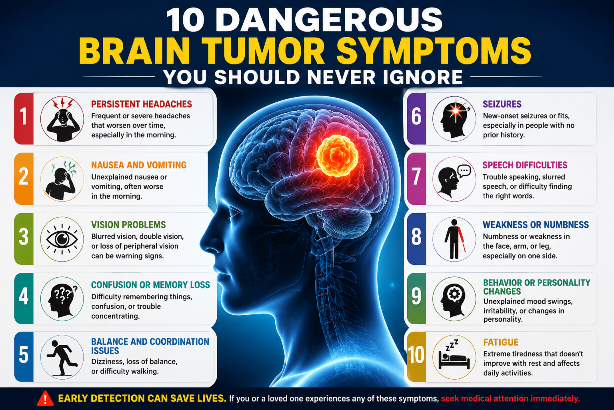
10 Dangerous Brain Tumor Symptoms You Should Never Ignore
He’s a tough guy. The kind of person who goes to work with a fever, waves off pain like it’s a minor inconvenience, and genuinely believes that most health problems sort themselves out if you just push through them.
So when the headaches started, he did what he always does. He took some painkillers. He went to bed early. He told himself it was stress from work.
Seven months later, he collapsed in his kitchen.
The scan showed a tumor the size of a golf ball sitting in the right side of his brain. The neurosurgeon told his family that the warning signs had probably been present for close to a year.
A whole year. Of symptoms that were there, speaking clearly, being ignored.
He survived. He went through surgery and treatment and a long, difficult recovery. But the neurosurgeon was honest with the family: if he had come in six months earlier, the treatment would have been significantly less complicated.
That experience changed how I look at “ordinary” symptoms forever. And it’s the reason I’m writing this article — because I genuinely believe that knowing this information is the difference between catching something early and catching it too late.
Why Brain Tumor Symptoms Get Ignored
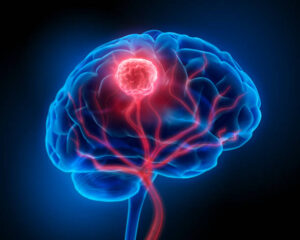
Before we get into the specific symptoms, I want to address something important.
People don’t ignore brain tumor symptoms because they’re careless. They ignore them because the early symptoms look almost identical to things we all experience regularly.
Headaches. Tiredness. Forgetting things. Feeling a bit off.
In a world where everyone is stressed, sleep-deprived, and staring at screens all day, these things feel completely ordinary. Our brains — ironically — are very good at rationalizing away the signals our bodies are sending.
The difference between a concerning symptom and an ordinary one often comes down to pattern. Persistence. Progression.
That’s what this article is really about.
Warning Sign #1: Headaches That Follow a Pattern — And Get Worse

Not all headaches are red flags. But certain headache patterns absolutely are.
The headaches associated with brain tumors tend to have specific characteristics that separate them from tension headaches or migraines.
They are worst in the morning — right after waking up. This happens because lying flat for hours causes cerebrospinal fluid to build up pressure inside the skull. By morning, that pressure has peaked.
They get worse with certain movements. Bending forward, coughing, sneezing, or straining can intensify the pain significantly. Regular headaches don’t usually behave this way.
They wake you up from sleep. A headache that pulls you out of deep sleep at 2am or 3am is unusual. Normal tension headaches don’t typically do this.
They progressively worsen over weeks or months. This is the crucial part. A headache that keeps getting worse — rather than improving or staying the same — is your body sending a serious signal.
Standard painkillers don’t touch them. If you’re taking ibuprofen or paracetamol every day and getting minimal relief, that pattern should be investigated.
My uncle’s headaches ticked almost every single one of these boxes. He just didn’t know what boxes to look for.
Warning Sign #2: Seizures With No Prior History

If you have never had a seizure in your life and you suddenly experience one — that is a medical emergency until proven otherwise.
Full stop. No exceptions.
Brain tumor seizures can look very different from what most people picture. Yes, there are generalized seizures involving full-body convulsions and loss of consciousness. But there are also focal seizures that are much subtler.
A focal seizure might look like: one arm jerking rhythmically for thirty seconds. A sudden blank stare and unresponsiveness that lasts a minute. Repetitive lip-smacking or hand movements. A sudden overwhelming smell that isn’t there. A wave of intense déjà vu.
These are easy to dismiss. People describe them as “a weird episode” or “just zoning out.” They happen, they pass, and the person feels fine afterward — which makes it very easy to convince yourself it wasn’t anything serious.
It might not be. But it might be. And the only way to know is to get checked.
Any first-time seizure in an adult requires brain imaging. Always.
Warning Sign #3: Vision Changes That Can’t Be Explained by Your Eyes
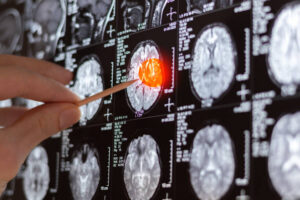
image of human brain. Medical treatmant concept. Diagnosis of the disease humans head. Close up.
This is one of the most commonly missed early signs because people naturally assume vision problems come from their eyes — and go to an optometrist rather than a neurologist.
But vision is processed by the brain. And when a tumor puts pressure on the visual pathways, the problems show up in how vision is processed — not in the eyes themselves.
Tumor-related vision symptoms can include:
- Blurry vision that comes and goes without explanation
- Double vision, particularly when looking to one side
- Loss of peripheral vision — noticing that your side vision has narrowed
- Visual field cuts — areas of your vision that have gone dark or blurry
- Seeing flashing lights or visual disturbances that aren’t related to migraines
The key difference is this: if you get new glasses and your vision problem doesn’t improve, or if your optometrist can’t find any explanation for your symptoms, push for a referral to a neurologist.
Don’t accept “your eyes are fine” as a complete answer if you’re still experiencing problems.
Warning Sign #4: Personality and Behavior Changes

This is the symptom that families notice first and doctors hear about last.
Why? Because the person experiencing the changes often doesn’t recognize them in themselves. And family members feel awkward bringing it up — it seems rude to tell someone they’re “acting differently.”
But personality changes caused by a brain tumor can be striking. The brain controls who we are at a fundamental level. When something disrupts brain function, it can alter personality, judgment, emotional regulation, and behavior in ways that feel completely out of character.
Warning signs include:
- Sudden irritability or anger in someone who was previously calm and patient
- Impulsive decisions or behaviors that are completely out of character
- Emotional flatness — a loss of normal emotional responses
- Inappropriate social behavior
- Depression or anxiety that appears suddenly with no identifiable life trigger
- Paranoia or suspicion that wasn’t previously present
Families often describe it as a shift that happened gradually — and they can only see how significant it was when looking back. “He started saying things he would never have said before.” “She stopped caring about things that used to matter to her enormously.”
If you notice these changes in someone you love, gently encourage them to see a doctor. If you notice them in yourself — take them seriously.
Warning Sign #5: Cognitive Decline and Memory Problems
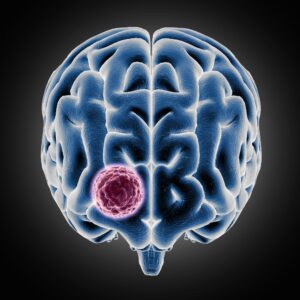
There is a significant difference between normal forgetfulness and cognitive decline that suggests something neurological is happening.
Normal forgetfulness: walking into a room and forgetting why you went there. Taking a moment to remember someone’s name. Missing an appointment occasionally.
Concerning cognitive changes: forgetting entire conversations that happened hours ago. Being unable to follow a simple sequence of instructions that would previously have been easy. Getting confused in familiar environments. Making errors in tasks you’ve performed hundreds of times without difficulty.
The word that matters here is progressive. Normal age-related memory changes are gradual and subtle over years. Tumor-related cognitive decline tends to worsen noticeably over weeks to months.
If you or someone close to you has noticed a meaningful drop in cognitive function over a relatively short period — especially combined with any other symptoms on this list — please get it checked.
Warning Sign #6: Speech and Language Difficulties

Suddenly struggling to find words in the middle of sentences. Saying the wrong word and not realizing it. Reading words on a page but not being able to make sense of them. Writing sentences that don’t make sense even though they feel correct as you’re writing them.
Language is controlled by specific regions of the brain — primarily in the left hemisphere for most people. When a tumor affects these areas, it can disrupt language in very specific ways.
Aphasia is the medical term for language difficulties caused by brain damage. It can affect speaking, understanding, reading, or writing — sometimes all of them simultaneously.
People experiencing early aphasia often describe it as feeling like the word they want is right there — on the tip of their tongue — but they simply cannot access it. This happens to everyone occasionally. When it happens constantly, in rapid succession, it’s worth investigating.
- A teacher who suddenly can’t find words while explaining a lesson
- A writer who starts producing sentences that don’t make sense
- A person who can no longer understand what others are saying even though their hearing tests normal
These are not signs of aging. These are signs worth taking seriously.
Warning Sign #7: One-Sided Weakness or Numbness
Progressive weakness or numbness on one side of the body — one arm, one leg, or one side of the face — is a significant neurological warning sign.
This symptom can overlap with stroke symptoms, which is why any sudden one-sided weakness should be treated as a stroke emergency and evaluated immediately.
But brain tumor-related weakness is typically more gradual. It develops over days, weeks, or months rather than appearing suddenly. You might notice it first as clumsiness — dropping things more often with one hand, tripping over the foot on one side.
Some people also experience sensory changes — numbness, tingling, or a “pins and needles” sensation on one side — without obvious weakness.
Any progressive, unexplained weakness or numbness that affects one side of the body needs medical evaluation. Don’t wait to see if it gets better on its own.
Warning Sign #8: Balance and Coordination Problems

Suddenly feeling unsteady when walking. Difficulty with tasks that require precise coordination. Feeling like the room is moving or spinning — not just occasionally but persistently.
The cerebellum, located at the back of the brain, controls coordination and balance. Tumors in or near this area can cause significant problems with these functions.
People often describe it as feeling “drunk” even when completely sober. Walking becomes uncertain. Reaching for objects becomes less accurate. Activities like driving or climbing stairs feel suddenly dangerous.
Balance problems that develop rapidly over a matter of weeks — especially in combination with other symptoms — deserve neurological evaluation regardless of age.
Warning Sign #9: Nausea and Unexplained Vomiting

Specifically: vomiting that happens in the morning, often without much preceding nausea, and sometimes on an empty stomach.
This type of vomiting can be caused by increased pressure inside the skull. When intracranial pressure rises, it can trigger the vomiting center in the brain directly, bypassing the usual nausea warnings.
On its own, morning nausea has dozens of explanations. But paired with progressive morning headaches and other neurological symptoms, it becomes part of a pattern that needs investigation.
If you’re regularly vomiting in the mornings without a clear cause and you also have persistent headaches — please see a doctor and mention both symptoms together. The combination matters.
Warning Sign #10: Hearing Changes or Persistent Ear Ringing
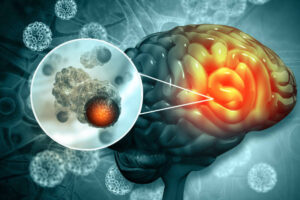
Unexplained hearing loss in one ear — particularly if it comes on gradually and affects only one side. Persistent ringing, buzzing, or hissing sounds that have no external cause.
These symptoms can indicate an acoustic neuroma — a type of benign brain tumor that develops on the vestibulocochlear nerve, which connects the inner ear to the brain.
Acoustic neuromas are typically slow-growing and benign. But they can cause significant problems if left untreated, including complete hearing loss, facial numbness, and balance problems.
They’re also very treatable when caught early.
One-sided hearing loss or persistent tinnitus that appears without obvious cause should be evaluated by a neurologist or ENT specialist who can order appropriate imaging.
The Rule of Patterns
No single symptom on this list means you have a brain tumor. Every one of these symptoms has multiple possible causes, most of which are far less serious.
What matters is the pattern.
- Multiple symptoms occurring together
- Symptoms that are getting progressively worse rather than improving
- Symptoms that don’t have an obvious explanation
- Symptoms that don’t respond to standard treatments
- Symptoms that your gut is telling you are not normal
That combination is when you need to stop waiting and start pushing for answers.
What to Do Right Now
If you’re reading this and recognizing symptoms — either in yourself or someone you love — here is the practical path forward.
Step 1: Write Everything Down
Every symptom. When it started. How often it happens. How severe it is. Patterns you’ve noticed. This information is genuinely valuable to doctors and will help ensure nothing gets overlooked.
Step 2: See Your Primary Care Doctor
Don’t go in saying “I think I have a brain tumor.” Go in saying “I’ve been experiencing these specific symptoms for this long and they’re getting worse.” Let the symptoms speak for themselves.
Step 3: Be Completely Honest
Don’t minimize. Don’t leave things out because they seem embarrassing or unrelated. Brain tumor symptoms can seem unrelated to each other. Tell your doctor all of it.
Step 4: Push for Referral if Needed
If you’re dismissed without clear answers, push for a referral to a neurologist or request brain imaging directly. You are entitled to advocate for yourself. A good doctor will welcome that advocacy.
Step 5: Get a Second Opinion
You are always entitled to a second opinion. Always.
A Final Word
My uncle is doing well now. He’s two years post-surgery, back to his stubborn, hardworking self — just with a slightly different perspective on what symptoms deserve attention.
He tells people his story when it comes up. Not for sympathy, but because he genuinely wishes someone had shown him this information earlier.
Consider this article that someone showing you.
The symptoms are often there. The question is whether we recognize them — and whether we act on them in time.
Disclaimer: This article is written for educational and informational purposes only. It does not constitute medical advice or diagnosis. If you are experiencing any of the symptoms described in this article, please consult a qualified healthcare professional as soon as possible. Early evaluation is always better than waiting.